President Donald Trump has declared imports of foreign-made industrial robots and machinery a national security threat, ordering negotiations with trading partners and raising the prospect of tariffs or other import restrictions if agreements are not reached within 180 days.
The October 28 proclamation extends the administration’s scrutiny of foreign robotics into equipment widely used in American factories. It does not impose immediate tariffs or an outright import ban. Instead, it directs talks over imports of robotics, industrial machinery and their components, while reserving potential measures including duties, quotas and fees.
The action follows a Commerce Department investigation overseen by Commerce Secretary Howard Lutnick. The proclamation says dependence on imported equipment threatens the US industrial base and its long-term competitiveness in a sector important to national security. It also identifies potential cybersecurity and safety risks associated with foreign-made systems.
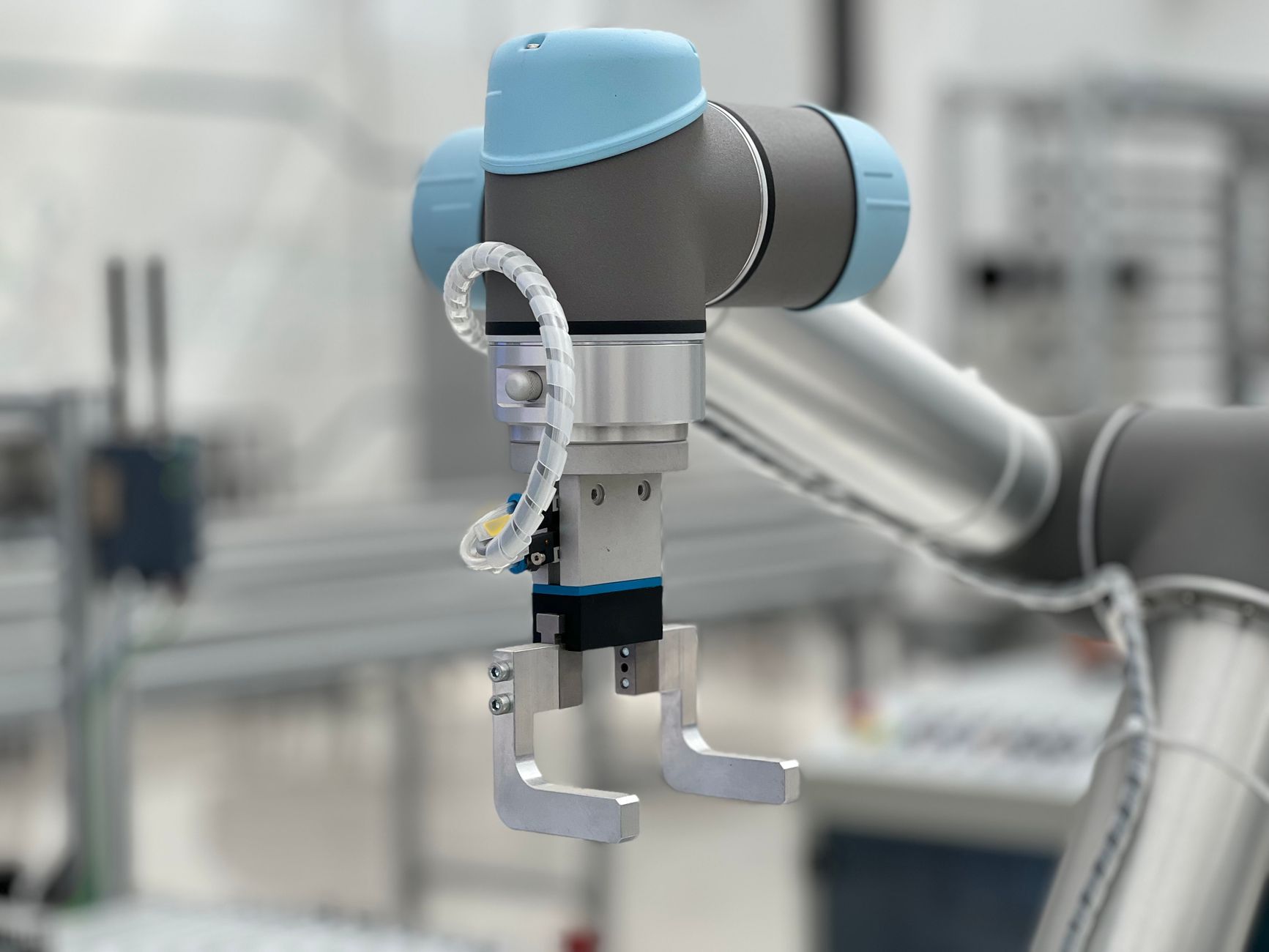
Industrial robots support the production of military equipment as well as civilian goods. Their applications include welding, moving heavy components, handling materials and performing repetitive assembly tasks. Because these machines operate within production systems, disruptions can affect more than an individual workstation, while compromised controls can create physical safety risks alongside data-security concerns.
The potential trade measures would affect a market in which American manufacturers depend heavily on overseas suppliers. General Motors, Ford, Tesla, Boeing and Lockheed Martin are among the major US companies that use foreign-made factory robots. Any new import duties would be paid by the businesses importing the equipment, potentially increasing the cost of installing or upgrading domestic production lines.
Four prominent suppliers of large industrial robotic arms—FANUC, ABB, Yaskawa and KUKA—are headquartered in Japan, Switzerland and Germany. Their equipment performs heavy-duty factory work for which there is no comparable US supplier offering the same class of large industrial robotic hardware. The foreign manufacturers have nevertheless been expanding engineering and assembly operations in the United States.
The proclamation itself acknowledges the limits of domestic supply, stating that American robotics companies cannot currently meet national security needs and that the country depends on imports for most categories of robotics, industrial machinery and associated components. That dependence presents a practical constraint on efforts to shift procurement toward US-made equipment.
Demand for automation remains substantial. The International Federation of Robotics recorded nearly 38,500 new industrial robot installations in the United States in 2025, making the country the second-largest market for industrial robot use. Even Amazon, which has substantially expanded its own robot production and developed specialized robotic arms, continues to use some foreign-made equipment, including FANUC arms.
The latest action also reaches beyond an earlier Federal Communications Commission restriction. In July 2026, the FCC banned new models of foreign-made robots including robotic vacuums, quadruped robots and humanoids, but exempted industrial arms and other fixed or stationary robots commonly used in factories and warehouses.
The negotiations now ordered by Trump will determine whether trading partners reach agreements within the proclamation’s 180-day window. If they do not, the administration has left open additional import measures, without yet specifying which equipment would face charges or what those charges would be.
Sources: Ars Technica (AI)